

You could be forgiven for thinking that we live and work in a low trust environment.
You hear this sort of thing all the time, such as here, here, here and here. The Edelman trust barometer recently found that the UK ranks very poorly among other countries in its ratings. In 2023, Ipsos reported that trust in politicians had fallen to a record low in its veracity index, which has been running since 1983. Over the weekend, Adam Curtis wrote a piece for the Guardian introducing his new series, Shifty, in which he claims that in the 1990s, following the Thatcher government, trust collapsed in politicians and other public figures.
This is all very compelling. Politicians and others in positions of power are often accused of lying and sometimes get caught doing so. There are then the many half-truths, deceptions and obfuscations of political language. About a decade ago, the Leave campaign’s momentum in the UK’s EU referendum was neatly summarised by Michael Gove’s line that ‘we’ve had enough of experts’. At the heart of that sentiment is the idea that we no longer trust people in authority.
The only problem with any of this is that it isn’t true. Levels of trust in the UK are fine, and you should stop worrying about it.
In this piece, I’m going to make three arguments:
1. We’ve never trusted politicians, and there haven’t been any big shifts in public views of politicians’ trustworthiness since at least the 1980s.
2. In many other walks of life, trust is either high or improving or both
3. Trust isn’t universally good: in some cases, a dose of cynicism is healthy
Politicians: a long history of distrust
Adam Curtis’s recent piece for the Guardian, in which he promotes his new series, Shifty, is full of unsubstantiated claims about trust in the UK. Here are some examples:
“I wanted to trace the rise of the thing that has destroyed the confidence of our age: distrust…”
“The early 90s saw an extraordinary collapse in trust in politicians.”
“By the end of the 80s the belief that you couldn’t trust anyone in public life, which Buchanan started, finally came round to the politicians themselves.”
Data from Ipsos Mori’s long running veracity index injects some much needed fact into this fiction. In 1983, 18% of the public generally trusted politicians to tell the truth. Ten years later, in 1993, that was 14%. A drop, certainly, but an ‘extraordinary collapse’? Hardly.
In forty years of data no more than 23% of the public have trusted politicians. It makes for a very dull chart.
We didn’t trust politicians when Thatcher was winning election after election in the 1990s. We didn’t trust politicians after Black Wednesday. We didn’t trust politicians when New Labour swept to power in 1997. We didn’t trust politicians throughout the 2000s, or during the global financial crisis, or the years of austerity, or the EU referendum, or the pandemic.
In many cases, trust is high, or improving, or both
That politicians are just as reviled now as they were in the 1980s is hardly a knockout blow in my argument that levels of trust are basically fine. Sure, things haven’t changed – but it’s still a poor set of ratings.
The problem is that our distrust of politicians mutates into a broader fear that we can’t trust anything or anyone. But this isn’t true either. In many cases, trust in certain professions is high – doctors, nurses, engineers, professors, judges and teachers all enjoy very high levels of trust (in each case, in 2024, at least 80% of the population trusted them). In many cases, that trust is increasing relative to 2023.
There have been longer term shifts in trust, too. Many of these are in an upwards direction, although in some cases the trend is negative.
Scientists, trade union officials, civil servants, bankers (bankers!) and journalists are all significantly more likely to be trusted now than in the past. The clergy and TV newsreaders are in an unhappy – but also small – group for whom trust is in long term and significant decline.
Social trust is also pretty good. The same Ipsos data finds that while not everyone is trusting, the majority of people say that you can trust the ordinary man or woman on the street. There isn’t much change over time, but the trajectory is improving.
A useful drop of cynicism
I think the data for the first two points is conclusive. Trust in many areas of life is high, and in those were it’s low, its lowness isn’t new. This third point is much more subjective: could we be placing too high a premium on trust?
Every edition of the Edelman Trust Barometer is reported on in hushed tones, as if it reveals some terrible new depth to which we’ve plummeted. And fair enough: the UK has been bottom of the rankings lately. But China is top of the rankings. Is that good? Do we want to have the same regard for authorities as those in one-party states?
Clearly, it would be nice to live in a society where we had faith in authorities and leaders to deliver on our behalf, to be honest and have integrity. But deference is bad. Below is a screenshot of the dictionary definition of deference, from last weekend:
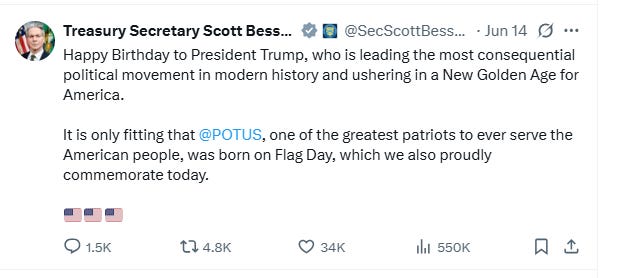
Cynicism is good. We shouldn’t take what authorities say at face value, we should scrutinise politicians and their promises and we should question power. We should run a mile from whatever state of affairs produces the kind of cringe exemplified above. And we should remember that trust is, in most cases, unchanging. Where it is changing, it’s often improving.
What does this mean?
The same implication all the time: this isn’t changing. In most contexts, trust is the same as it was decades ago. In some other contexts, it’s notably higher.
In a consumer context, trust probably matters at least a little bit. When we buy something from somewhere – certainly if it’s a product or purchase or channel we haven’t used before – we might rely on blind trust to seal the deal. But it’s more likely we use other sources of evidence, like word of mouth, past experience, product reviews or a kitemark (all have something to do with trust – without it we wouldn’t do anything).
The data provided by long running surveys like the veracity index are so strongly at odds with the idea of profound societal distrust it’s genuinely hard to know how the idea got started in the first place. One possibility is that the distrust story is a way of confirming to ourselves that things are worse today: in short, it’s a(nother) myth of decline.
On 26th June the latest in Trajectory’s long running – and increasingly popular - series of trends briefings will be Slow Futures themed. We’ll be exploring the things that aren’t changing and the things that are only changing very slowly and running into plenty of myths of decline along the way. That session is free to attend. If you haven’t already, sign up here.
Thanks for reading this edition of Slow Futures. If you enjoyed this piece, please share it.